Human Rights

A new global movement for human rights takes shape

At a time of growing division, conflict and uncertainty, the Global Alliance for Human Rights seeks to unite people around a shared vision of dignity, equality and justice for all. Convened by the UN Human Rights Office, the Alliance brings together governments, civil society, businesses, cities, academics, young people and communities to champion human rights in everyday life. As the world approaches the 80th anniversary of the Universal Declaration of Human Rights in 2028, the Alliance aims to transform hope into action—sparking collaboration, inspiring solutions and building a future where human rights are upheld for everyone, everywhere. Watch the launch.

The Global Alliance will connect existing initiatives and create new ones, multiplying impact and reach.
Photo:UN Human Rights
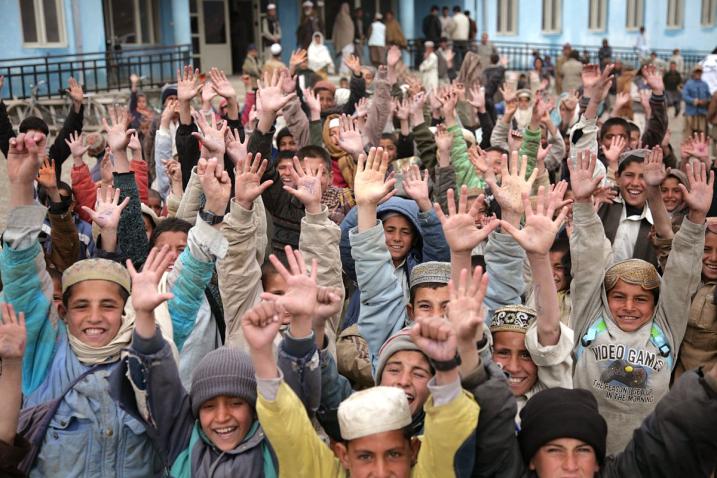
A group of Rohingya refugee children looking at the camera during a visit to a Multi-purpose Centre for Children and Adolescents in a refugee camp in Cox's Bazar.

Refugee numbers drop for first time in a decade, but millions remain trapped

10 June 2026 — Global forced displacement has decreased for the first time in a decade, the UN refugee agency (UNHCR) reported on Thursday, though the figure remains unacceptably high and tens of...

UN rights chief urges ‘massive rethink’ of US immigration policies ahead of World Cup

10 June 2026 — The UN's top human rights official has called for a 'massive rethink' of US immigration and security policies ahead of the World Cup, warning that racial profiling, surveillance and...

Middle East LIVE: Diplomacy in focus as escalation ‘reverberates across borders and continents’, warns UN chief

10 June 2026 — Nearly four months after the latest Middle East crisis erupted and despite a fragile ceasefire between the United States and Iran, tensions continue to reverberate across the region...

UN Sustainable Development Goals

17 Goals to transform our world

The Sustainable Development Goals are a call for action by all countries — poor, rich and middle-income — to promote prosperity while protecting the planet.

hands holding megaphone and speech bubble

The Goals can improve life for all of us. Cleaner air. Safer cities. Equality. Better jobs. These issues matter to everyone. But progress is too slow. We have to act, urgently, to accelerate changes that add up to better lives on a healthier planet. Find new inspiring actions on the app and at un.org/actnow.

Today, half the world is under 30, and this generation is a powerful force for peace. The UN "Hear Us. Act Now for a Peaceful World" campaign, launched on the International Day of Peace, aims to include, invest in, and partner with young people to build lasting peace. 

children holding up books

Reading and learning are essential to children’s growth and development; stories can fuel their imagination and raise awareness of new possibilities. The SDG Book Club aims to encourage them to learn about the Goals in a fun, engaging way, empowering them to make a difference.

icon with fish swimming below waves


Goal 14: Conserve and sustainably use the oceans, seas and marine resources

Healthy oceans and seas are essential to human existence and life on Earth.

More from the
United Nations

Featured stories from across the United Nations and our world-wide family of agencies, funds, and programmes.

Aerial shot of the Itaipu Biosphere Reserve in Paraguay. The image shows a large forest alongside a river. UNESCO, Natural Resources and the Environment

UNESCO charts a new path for people and nature

UNESCO’s biosphere reserves reverse the traditional conservation model by treating local communities as partners rather than obstacles. With more than 700 reserves in 142 countries, covering 7.5 million square kilometers, these “living laboratories” integrate biodiversity protection, scientific research, and sustainable livelihoods. Last week, 250 experts from 34 countries gathered in Paraguay for the Man and the Biosphere Programme’s International Coordinating Council. The host, Paraguay’s Itaipu Biosphere Reserve, protects the country’s largest remaining Upper Paraná Atlantic Forest corridor while supporting 250,000 residents. Through restoration efforts, nearly 4 million trees have been planted. The meeting also welcomed 14 new reserves, including the first in Montenegro and Timor-Leste.

A technician is performing an ultrasound scan on a child, with the child’s mother standing next to them. World Bank, Artificial Intelligence

From Innovation to Impact: AI’s Role in Transforming Global Health

Good health underpins education, employment, and economic growth, yet 4.5 billion people still lack access to essential health services. AI offers practical solutions by expanding access through virtual triage, remote diagnostics, and clinical decision support, helping patients receive timely and appropriate care. Examples from Brazil, Ethiopia, and India show how low-cost “Small AI” tools can improve disease detection and maternal health in low-resource settings. AI can also strengthen health workers’ capacity, create jobs across the health ecosystem, and improve efficiency. However, realizing its potential requires investment, training, strong governance, privacy protections, and safeguards against bias. With responsible deployment, AI can help build stronger, more equitable health systems and expand quality care to millions.

A woman smiling at camera with one of her yaks in the background. FAO, Agriculture and Food

Betting on herding and herself

Before dawn breaks over Nepal’s eastern highlands, 28-year-old Subita Rai tends her herd of 20 yaks and chauris, continuing a tradition many of her peers left behind in search of opportunities abroad. Defying gender norms in a male-dominated profession, she balances herding, family responsibilities, and the growing challenges of climate change. Through support from the  Food and Agriculture Organization of the United Nations-hosted Mountain Partnership Secretariat and partners, Subita gained training and access to cheese-processing facilities, enabling her family to turn perishable yak milk into higher-value artisanal cheese. The shift has reduced losses, improved income stability, and strengthened local livelihoods. Now a cooperative board member, Subita represents a new generation of women pastoralists building resilient futures in Nepal’s mountain communities.

Human Rights

Enforced disappearances in Honduras

Families of people who were forcibly disappeared in Honduras have spent decades searching for their loved ones, demanding accountability, and preserving the memory of victims in the face of continued impunity.

Agriculture and Food

Turning ecosystem services into income

By compensating rural communities for ecosystem services such as reforestation, soil restoration, and carbon sequestration, we can generate income while promoting conservation, climate resilience, and sustainable development.

Food Aid, WFP

Delivering food to Afghan schoolchildren

From Indonesia to Afghanistan, fortified biscuits travel 15,000 km across closed borders and conflict zones to reach Afghan schoolchildren who rely on WFP meals.

Trade and Commerce, UNCTAD

Ocean services lead trade

New UNCTAD data show that services now account for most of the world’s $2.5 trillion ocean-related trade, overtaking goods and opening new opportunities for developing countries to create value from the ocean while protecting it.

What we do

Due to the powers vested in its Charter and its unique international character, the United Nations can take action on the issues confronting humanity in the 21st century, including:

Structure of the
United Nations

The main parts of the UN structure are the General Assembly, the
Security Council, the Economic and Social Council, the Trusteeship Council, the International Court of Justice, and the UN Secretariat. All were established in 1945 when the UN was founded.

The General Assembly is the main deliberative, policymaking and representative organ of the UN. All 193 Member States of the UN are represented in the General Assembly, making it the only UN body with universal representation.

The Security Council has primary responsibility, under the UN Charter, for the maintenance of international peace and security. It has 15 Members (5 permanent and 10 non-permanent members). Each Member has one vote. Under the Charter, all Member States are obligated to comply with Council decisions.

The Economic and Social Council is the principal body for coordination, policy review, policy dialogue and recommendations on economic, social and environmental issues, as well as implementation of internationally agreed development goals.

The Trusteeship Council was established in 1945 by the UN Charter, under Chapter XIII, to provide international supervision for 11 Trust Territories that had been placed under the administration of seven Member States, and ensure that adequate steps were taken to prepare the Territories for self-government and independence.

The International Court of Justice is the principal judicial organ of the United Nations. Its seat is at the Peace Palace in the Hague (Netherlands). It is the only one of the six principal organs of the United Nations not located in New York (United States of America).

The Secretariat comprises the Secretary-General and tens of thousands of international UN staff members who carry out the day-to-day work of the UN as mandated by the General Assembly and the Organization's other principal organs.

Learn more

Podium of the General Assembly Hall seen from below with the gold wall and the golden UN logo behind

The United Nations process to appoint the next Secretary‑General continues with interactive dialogues guided by the principles of transparency and inclusivity. Watch the interactive dialogues with the candidates: Michelle Bachelet Jeria (21 April), Rafael Mariano Grossi (21 April), Rebeca Grynspan Mayufis (22 April), Macky Sall (22 April) and María Fernanda Espinosa Garcés (15 June).

Climate Change is one of the defining issues of our time and we are at a pivotal moment. From shifting weather patterns that threaten food production, to rising sea levels that increase the risk of catastrophic flooding, the impacts of climate change are global in scope and unprecedented in scale. Taking decisive action today will make adapting to these impacts in the future more effective and less costly.

Women at UN CSW63 Side Event - “Take the Hot Seat”. Photo: UN Women/Ryan Brown

Women and girls represent half of the world’s population and, therefore, also half of its potential. Gender equality, besides being a fundamental human right, is essential to achieve peaceful societies, with full human potential and sustainable development.

General Assembly hall with the Secretary-General at the podium

The United Nations is the only place on Earth where all the world's nations come together to discuss common problems and find shared solutions that benefit all of humanity. Learn about the main areas of the UN’s activities; how it makes a difference to the world’s people; and how every citizen can get involved and make a contribution. 

Watch and Listen

Video and audio from across the United Nations and our world-wide family of agencies, funds, and programmes.

A new chapter. On and off the pitch. Today ‪@LamineYamal‬ becomes a UNICEF Goodwill Ambassador. From street games in his barrio to packed stadiums around the globe, play has been part of Lamine’s story throughout his life. Now he's using his voice to stand up for every child’s right to play. Because play isn’t a privilege. It's for everyone. No matter who you are, where you are from or what your life looks like. This Internationa lDay of Play, hear his message on why play matters.

Football brings us together. Climate action does too.

Football teaches us that the greatest matches are played as a team. And the future is, too.

Supporting gender-based violence survivors in Sudan

Despite being displaced herself by the war in Sudan, medical doctor Manasik dedicates herself to ensuring that women and girls who survived gender-based violence can find support.

UN Podcasts

Two people holding peppers in a vegetables factory.

Good jobs, strong businesses: productivity and responsible business conduct

With uneven growth and slowing productivity in many regions, can growth still be inclusive, sustainable and create decent jobs? In a new episode of ILO’s The Future of Work podcast looks at how responsible business practices shape firms, treatment of workers and the wider economy.
Podcast guests:
Mark Birrell, President, Australian Chamber of Commerce and Industry (ACCI)
Abdul-Moomin Gbana, General Secretary, Ghana Mine Workers Union
Githa Roelans, Head of the Multinational Enterprises and Responsible Business Conduct Unit, ILO

Latest Audio from UN News

The United Nations in Pictures

Images from across the United Nations and our world-wide family of agencies, funds, and programmes.

A smiling woman holding up a large frozen tuna steak.
Photo:UNDP

Protecting ocean gold: The Pacific’s sustainable tuna success story

The ocean sustains life and livelihoods, producing at least half of Earth’s oxygen, supporting vast biodiversity, and providing food and jobs for millions. Yet overfishing and ecosystem decline threaten its future. In the Pacific, however, a different story has emerged. Through more than 20 years of collaboration among 14 Pacific Island nations, regional organizations, scientists, and development partners, Pacific tuna fisheries have become the world’s first major tuna fishery where all four key stocks are harvested sustainably. Science-based management, regional unity, and initiatives such as the Vessel Day Scheme have strengthened food security, generated billions in economic value, and supported thousands of jobs. The Pacific’s success demonstrates how cooperation, stewardship, and long-term investment can protect marine resources while advancing sustainable development.

A gathering of young people from a youth-led organisation that promotes climate action and sustainable development in Burundi.
Photo:IOM 2026/Kenny B.Irakoze

Young leaders driving climate resilience across East Africa

Across East Africa, climate change is driving displacement and disrupting livelihoods, from rising waters along Burundi’s Lake Tanganyika to recurrent flooding in Kenya’s informal settlements. As communities face growing climate pressures, young leaders are developing practical solutions to build resilience. In Burundi, ISHAKA 2250 supports flood-displaced families through reforestation, livestock distribution, and livelihood restoration. In Kenya, Dreams Redefined combines climate action with community development through improved waste management, environmental practices, and financial literacy. Supported by an IOM climate mobility programme and grants, these youth-led initiatives demonstrate how local action can help communities adapt, recover, and thrive. Their work highlights the vital role of young people in addressing climate-driven displacement and building a more resilient future.