Natural Resources and the Environment

Every year since 2005, UNEP honours individuals and organizations working on innovative and sustainable solutions to address the triple planetary crisis of climate change, nature and biodiversity loss, and pollution and waste.  

In 2024, UNEP honours six bold environmental leaders working on innovative and sustainable solutions to restore land, enhance drought resilience, and combat desertification.

A group of women working at sorghum crops wait upon the arrival of a United Nations convoy near the village of Sabon Machi, Maradi region, Niger.

After two weeks of negotiations, COP16 in Riyadh, Saudi Arabia, concluded with commitments from nearly 200 countries to prioritize land restoration and drought resilience policies. Nations pledged $12 billion to tackle land degradation, desertification and drought, especially addressing the most vulnerable countries. Agreements included creating caucuses for Indigenous Peoples and Local Communities, advancing science-based policies, and promoting private-sector engagement initiatives. COP16 set the foundation for a global drought regime, to be finalized at COP17 in Mongolia by 2026.

The Global Fund for Coral Reefs aims to protect climate-resilient coral reefs and transition coastal economies to "ocean-positive" practices.

In Tambiri, women like Dabiré Ngalle are leading efforts to preserve shea trees, vital for their livelihoods, amidst an escalating ecological crisis.

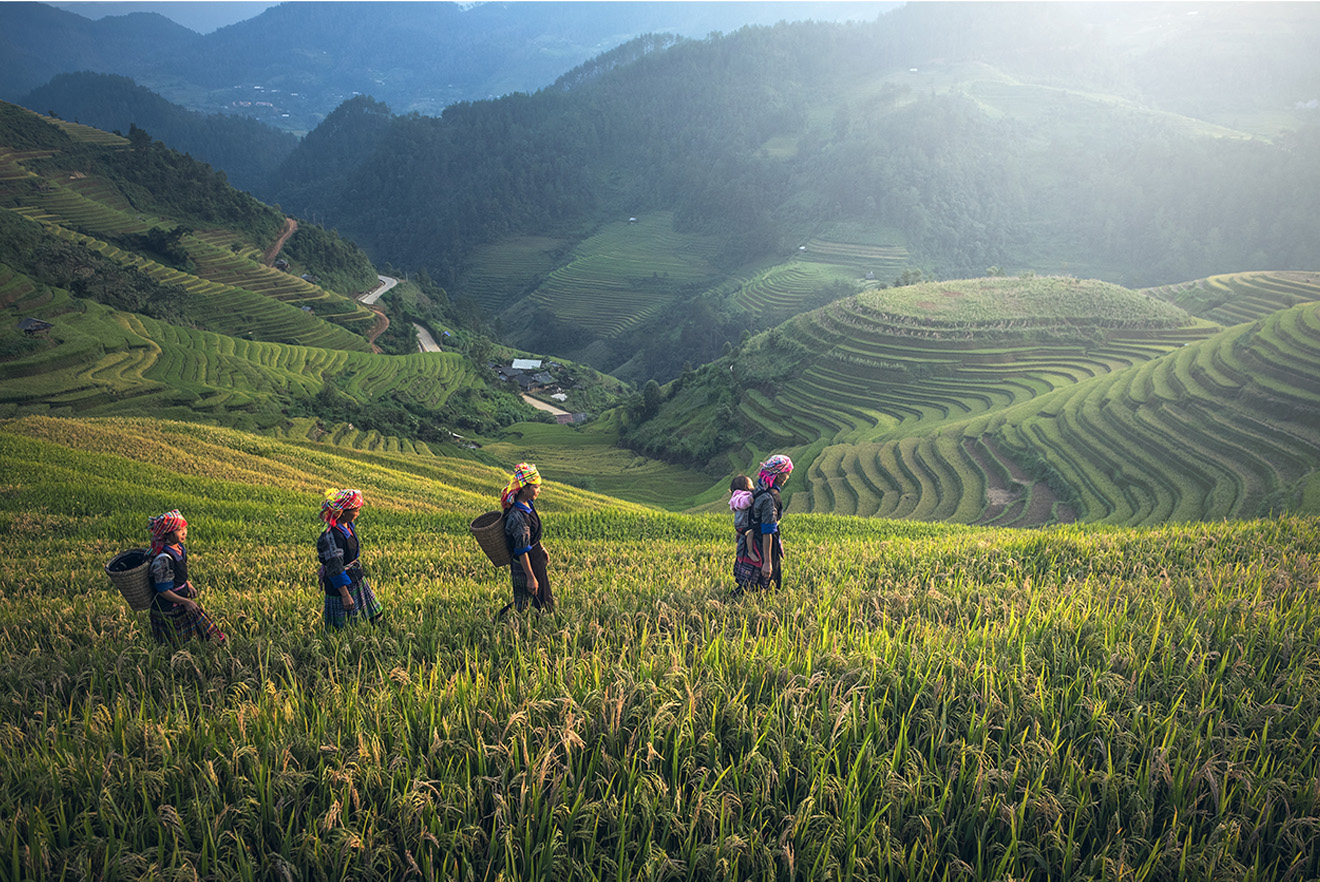
Farmers in rice terraces, Vietnam.

Mountains cover about 27% of the Earth's land surface, they are home to around half of the world's biodiversity hotspots and provide fresh water for half of humanity. But they are increasingly threatened by climate change and overexploitation. This International Mountain Day (11 December), under the theme "Mountain solutions for a sustainable future – innovation, adaptation and youth", the observance focuses on engaging youth to develop innovative and adaptive strategies to ensure the resilience and sustainability of mountain ecosystems.

Educational forests in Bolivia blend formal education with indigenous knowledge, promoting environmental awareness and cultural preservation.

 A flood-affected area in the Philippine region of Mindanao.

The year 2023 was recorded as the hottest year on Earth, and 2024 is projected to break that unwelcome record. Extreme weather has become the "new abnormal," with droughts, storms, floods, and wildfires occurring more frequently, lasting longer, and increasing in intensity. New data released by the United Nations Population Fund (UNFPA) and the Internal Displacement Monitoring Centre shows how extreme weather and disasters are severely impacting poor and vulnerable women and girls on the front lines of the climate crisis. Of the 14 countries most vulnerable to climate change, six are among the 10 countries with the highest maternal death rates: Afghanistan, Central African Republic, Chad, Nigeria, Somalia and South Sudan. Unless sufficient investments are made toward improving maternal health outcomes in these countries, severe weather events will only heighten the dangers of pregnancy and childbirth.

The COP16 in Cali, Colombia, resulted in a historic agreement requiring companies using genetic data to contribute to the UN-managed "Cali Fund," supporting biodiversity conservation and sustainable use.

A forester and a student from the Faculty of Forestry planting a tree.

The Serbian spruce is an endemic, endangered conifer found in the Balkan region and the oldest living tree in Europe, unknown until the late 19th century. Milan Mataruga, a dedicated forester since childhood, faces the physical challenges of conservation but wouldn't choose a different path. He is a leading scientist in the conservation of this species. The ‘Sustainability of Protected Areas’ (SPA) project, funded by the Global Environment Facility and implemented by the United Nations Development Programme (UNDP), aims to protect biodiversity in the region's native forests and provide sustainable management alternatives to mitigate climate change impacts.

People in a destroyed village after a flood.

Global average temperature rise is approaching 1.5°C above pre-industrial levels, and the latest predictions put the world on course for a catastrophic rise of 2.6-3.1°C. As climate impacts hit the world’s poorest hardest, UNEP’s Adaptation Gap Report 2024: Come hell and high water finds that nations must scale-up adaptation, starting with a commitment on finance at this upcoming COP29. Even though finance flows are rising, there is still a huge gap between what is needed and what is being delivered. The report provides a science-based assessment of the global progress on climate adaptation.

View of a coastal town in Sri Lanka, devastated by the 2004 Indian Ocean tsunami.

 This year's World Tsunami Awareness Day (5 November) focuses on "youth and future generations," in line with the International Day for Disaster Risk Reduction and the Summit of the Future. Activities will mark the 20th anniversary of the 2004 Indian Ocean tsunami by sharing its lessons with children and youth. The United Nations Office for Disaster Risk Reduction (UNDRR) urges at-risk countries to update evacuation routes, install warning systems, and raise awareness among young people. They also urge youth and educational institutions to play an online game to learn life-saving skills.

A woman giving a speech at UNESCO headquarters in Paris.

“I am absolutely sure that never before in this space has been a proper acknowledgment that we humans are not the only beings on the planet, I want to bring into the space the voice of the chimpanzees, the animal that I've been studying for so many years with my dedicated team. And what I'm going to say simply means: this is me; this is Jane. Because the chimpanzees have different ways of announcing their presence,” Dr. Goodall, or Dr. Jane as she likes to be called, then proceeded to speak in chimpanzee to begin her speech at UNESCO’s headquarters in Paris. Dr. Jane Goodall emphasized the importance of collaboration in combating climate change and supporting local communities, aligning with UNESCO’s efforts to leverage local knowledge for biodiversity protection.

COP16 in Cali, Colombia, is a vital opportunity to accelerate global action for biodiversity. 

Close-up of a lizard's eye in a circle on a green background.

The climate crisis, biodiversity loss, land degradation, desertification and drought are deeply intertwined facets of the planetary crisis. With most of the 2030 Sustainable Development Goals (SDGs) currently off track, we must urgently act to tackle this crisis and secure a livable future. This year, three major environmental Conferences of the Parties (COPs) are taking place within six weeks of each other. They represent a unique opportunity to tackle our most pressing issues. The outcome of the COPs is critical to our future. Here’s what you need to know about them.

Scholars planting mangroves.

The 16th UN Conference on Biodiversity, formally known as the Sixteenth Conference of the Parties to the Convention on Biological Diversity (COP 16), is celebrated in Cali, Colombia, from 21 October to 1 November.  In this crucial meeting, countries will check on how well they follow the Kunming-Montreal Global Biodiversity Framework, a UN international agreement designed to protect and restore nature. They will discuss how to monitor progress and advance resource mobilization to meet the goals of this important plan to stop the loss of plants, animals, and ecosystems.