
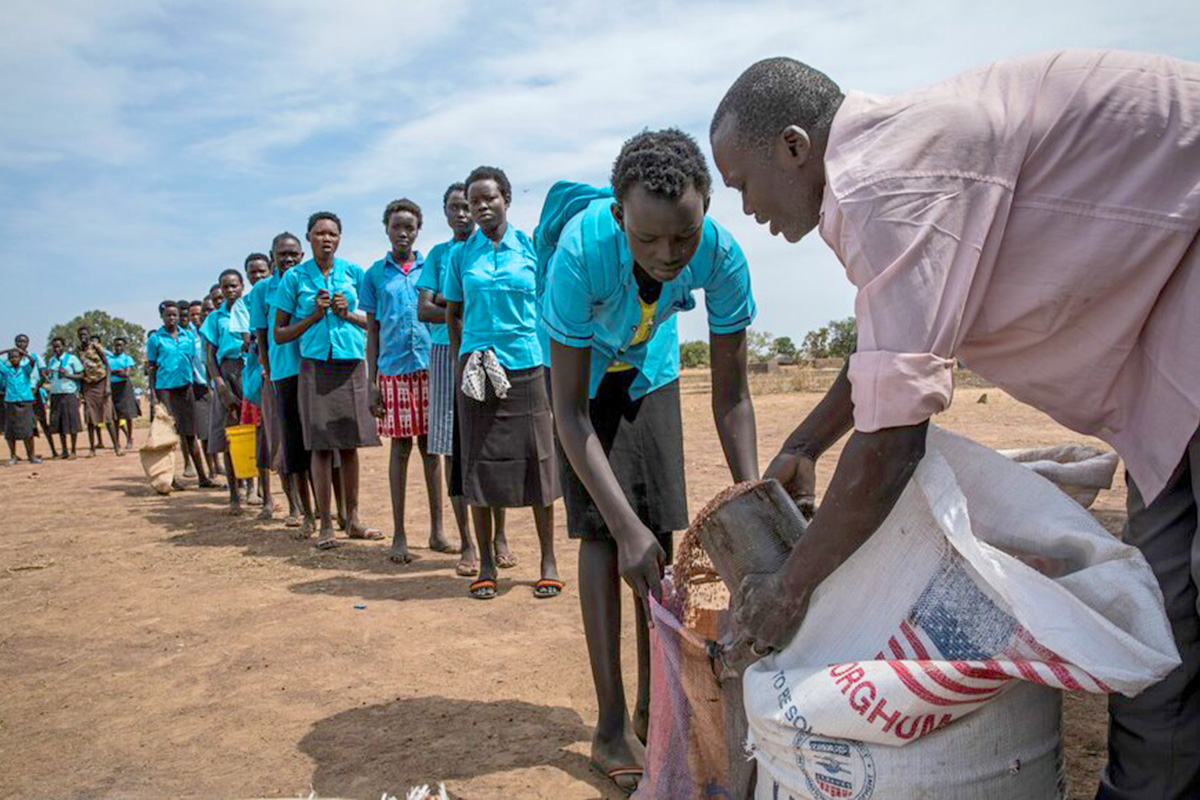
Girls in South Sudan are more likely than boys to be excluded from education. In some parts of the country, it is estimated that over 75 percent of primary-school-aged girls are not in school. Conflict, poverty, early marriage, teenage pregnancy, and cultural and religious views are among factors driving educational inequality that hinders the prospects of girls. The WFP’s school feeding programme provides daily hot meals to 500,000 children in 1,100 schools across South Sudan, an essential safeguard contributing to increased enrolment.
WFP
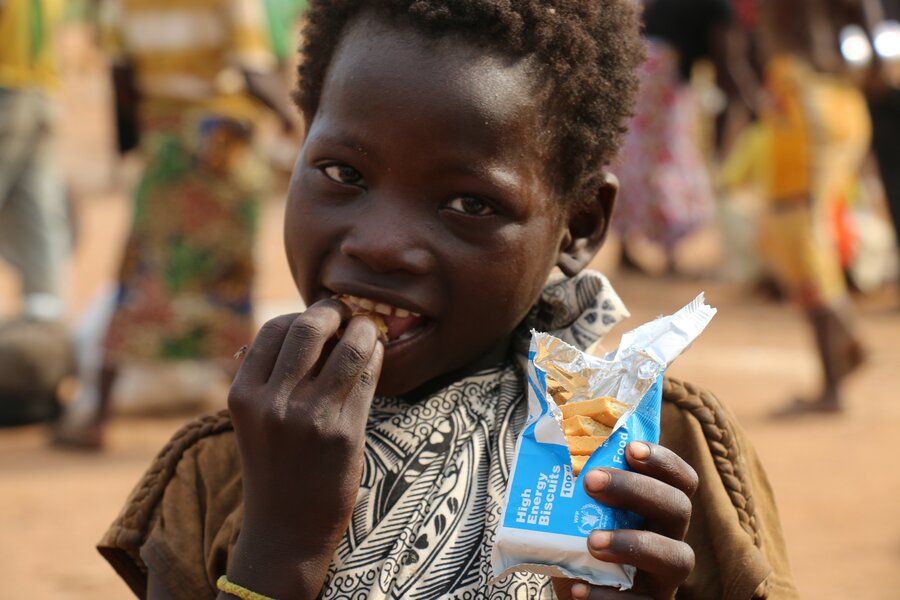
In a world where we produce enough food to feed everyone, 690 million people — nearly 9 per cent of the world's population — still go to bed hungry each night. After nearly a decade of progress, the number of hungry people has slowly increased — driven by the twin scourges of conflict and climate change, and now compounded by the COVID-19 pandemic. WFP is the frontline agency responding to emergencies caused by conflict, climate shocks, pandemics and other disasters. There are 34 million people in three-dozen countries at the ‘emergency’ phase of food insecurity in 2021, just one step away from a declaration of famine. The greatest threat currently lies in Yemen and South Sudan. WFP urgently need US$5.5 billion to avert famine, chiefly through life-saving food and nutrition assistance.

As food prices rise, basic misconceptions of famine also persist, WFP considers dispelling these is an important step in better understanding the current plight of millions of people.
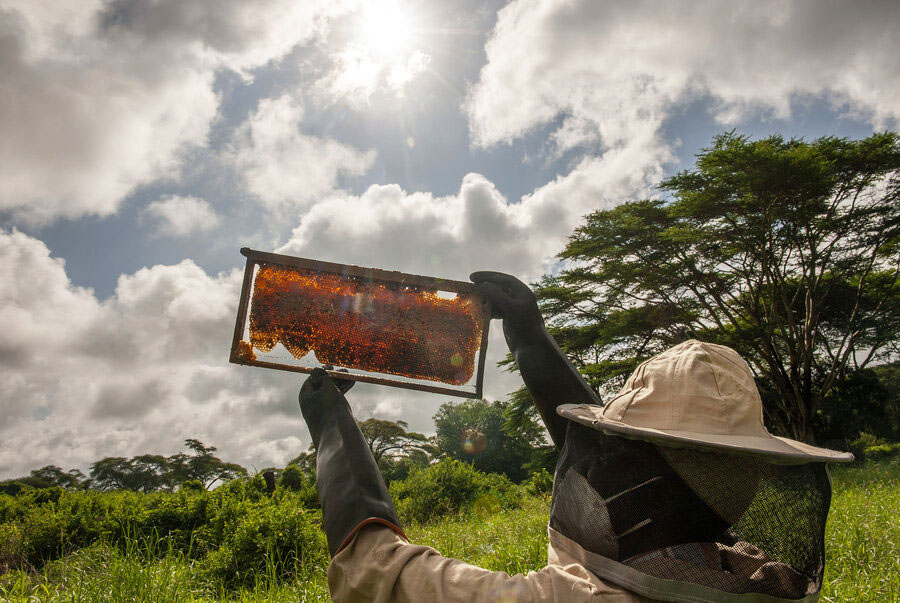
A group of seven men and five women, Kinna's passionate bee farmers are supported by the World Food Programme (WFP) — they are among more than 400,000 people in Kenya’s arid and semi-arid regions the organization empowers through livelihood activities such as fish-farming, and livestock and crop production. Since 2019, WFP has distributed over 9,000 beehives to farmers in 12 arid and semi-arid regions of Kenya in addition to honey harvesting suits, hive tools, centrifuge machines for extracting honey and refractometers for measuring the water content of honey.
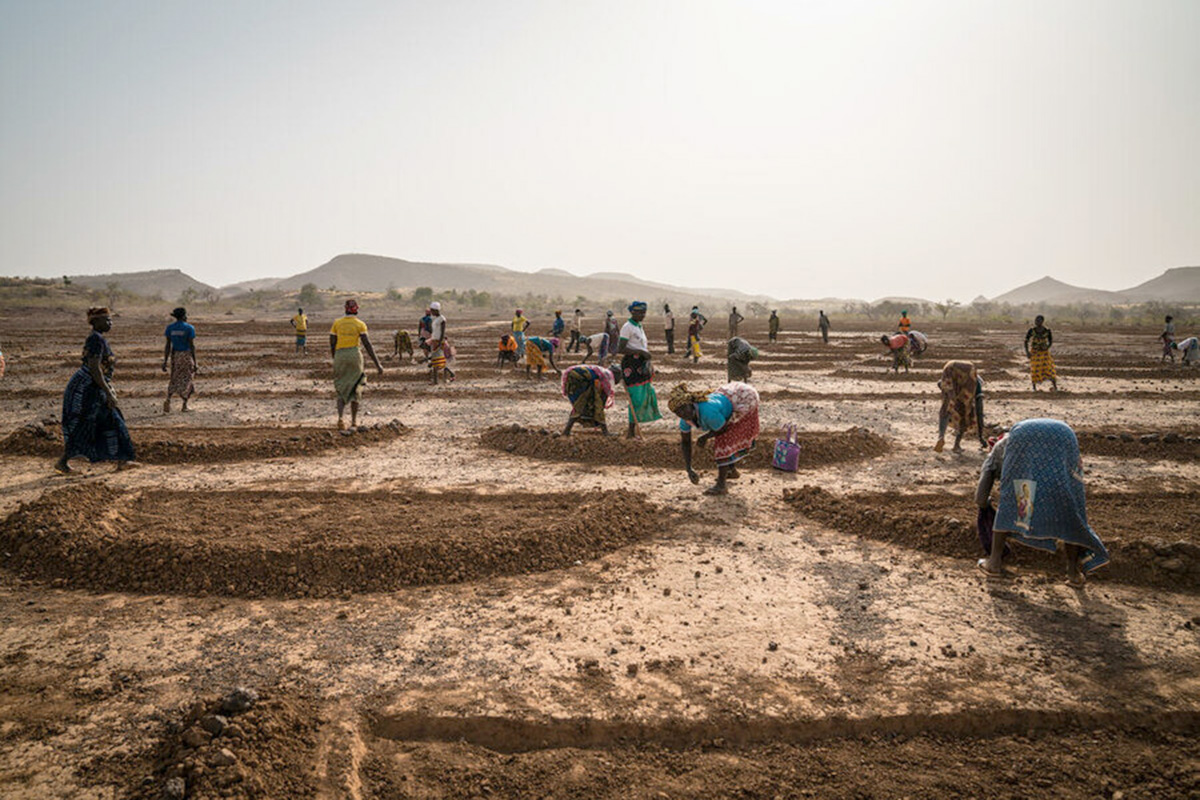
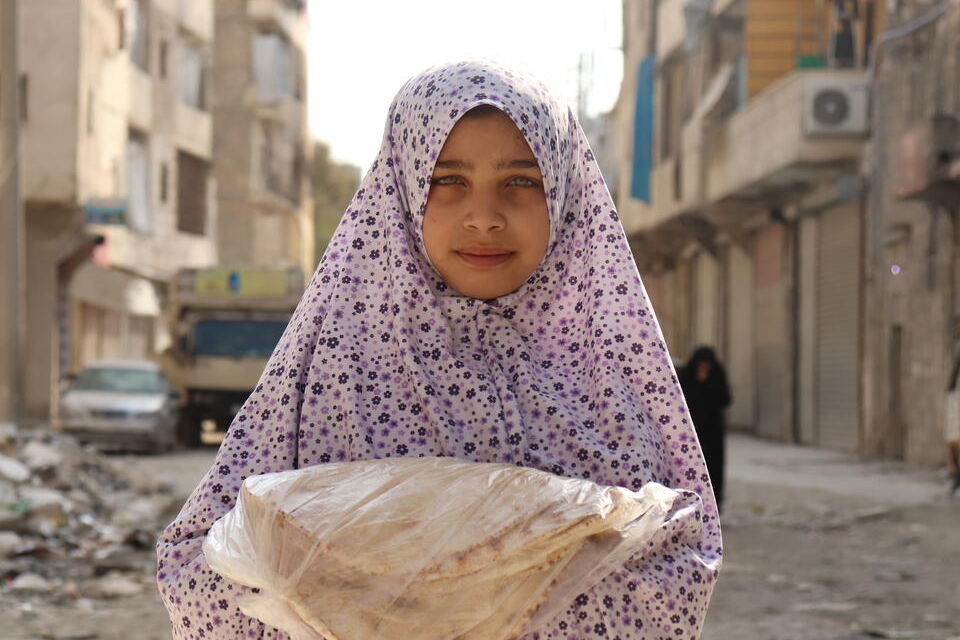
Food prices across the country are skyrocketing — the cost of basic food items is up a staggering 313 percent on figures for 2019. Today, a record number of Syrians don’t know what they will eat tomorrow. Each month, over 400 WFP staff are at hand providing life-saving food to 4.8 million people across Syria — together with nutrition assistance, this is critical for families struggling to rebuild their lives after a decade of conflict. They face unprecedented challenges to buy the basics, including medicines, and to continue sending their children to school.
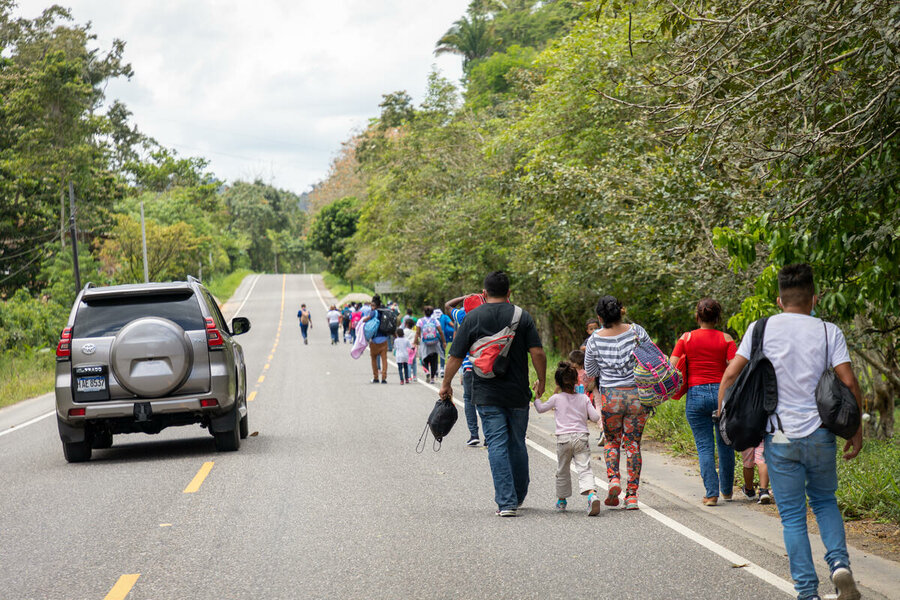
Honduras: Climate change, coronavirus and caravans
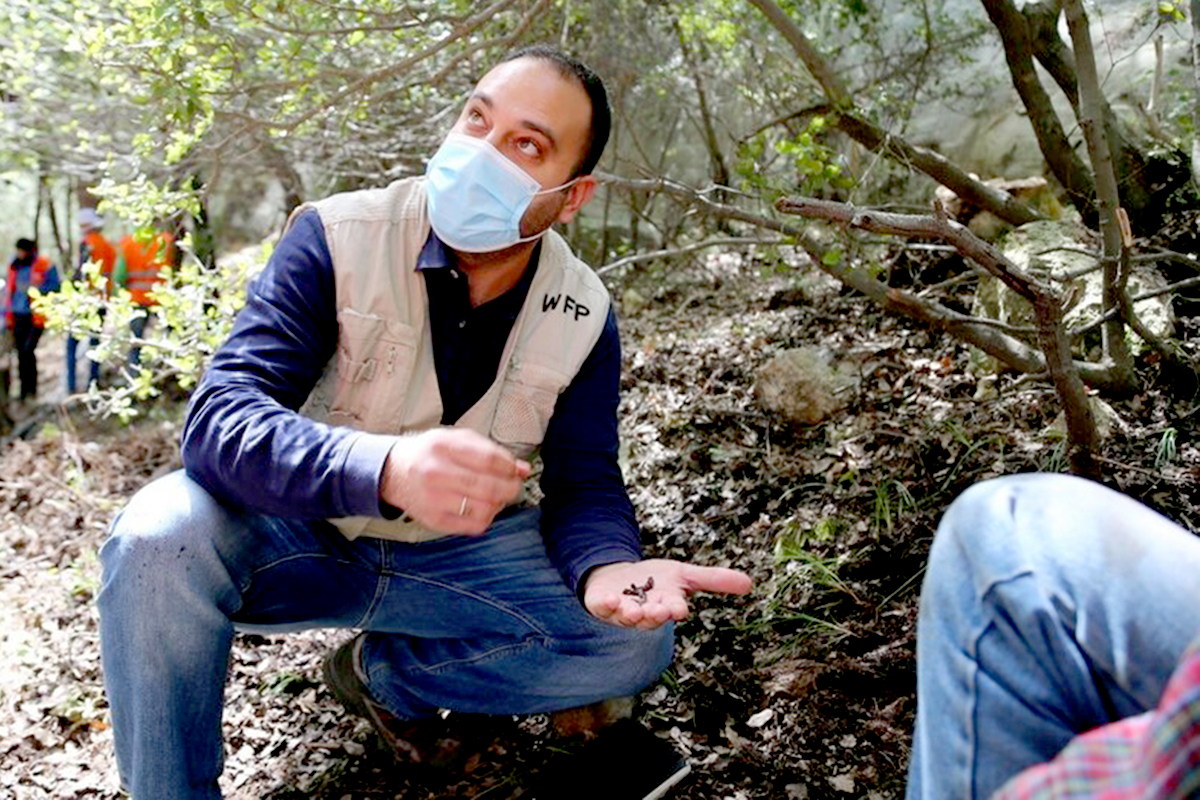
Earthworms are our ecosystem’s unsung superheroes
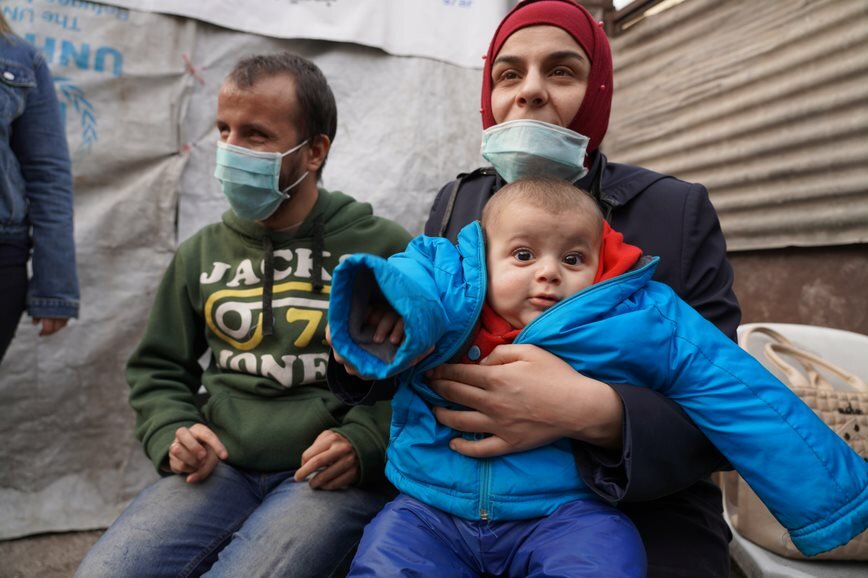
Rania and Abdallah’s story is inspiring. It reminds us all that even in a city’s darkest moments there are people who stubbornly refuse to give up and let tragedy define their lives. Instead, they are doing everything possible to build a better life for their son. They are among 4.8 million people in Syria that WFP reaches with assistance each month. Abdallah was born blind while Rania has 1 percent vision. Their son is not visually impaired. The couple have lived in Aleppo throughout the conflict and today receive WFP support for their basic needs. While many families mourn the loss of Aleppo’s beauty, having seen the city they love destroyed, Rania and Abdallah paint a shocking picture of enduring a conflict through what they’ve heard and sensed.

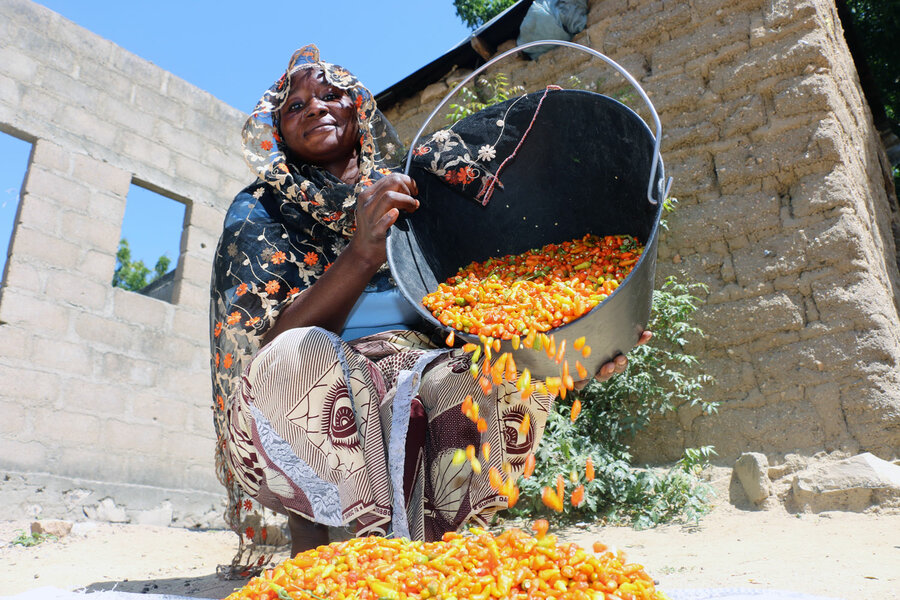
Mayramou Hamadou wears a smile on her face like a badge of honour. Though the mother of four doesn’t own land, she is part of a community effort that feeds the town of Mayo-Moskota, in Cameroon’s troubled Far North region. This year, the 47-member Klakil Farmers cooperative — of mostly women supported by the World Food Programme (WFP) — has harvested over 100 kg of peppers from its 7-hectare plot. Its members include longtime Mayo-Moskota residents but also displaced people like Mayramou, who fled the Boko Haram insurgency that has gripped this region and parts of neighbouring Nigeria too.
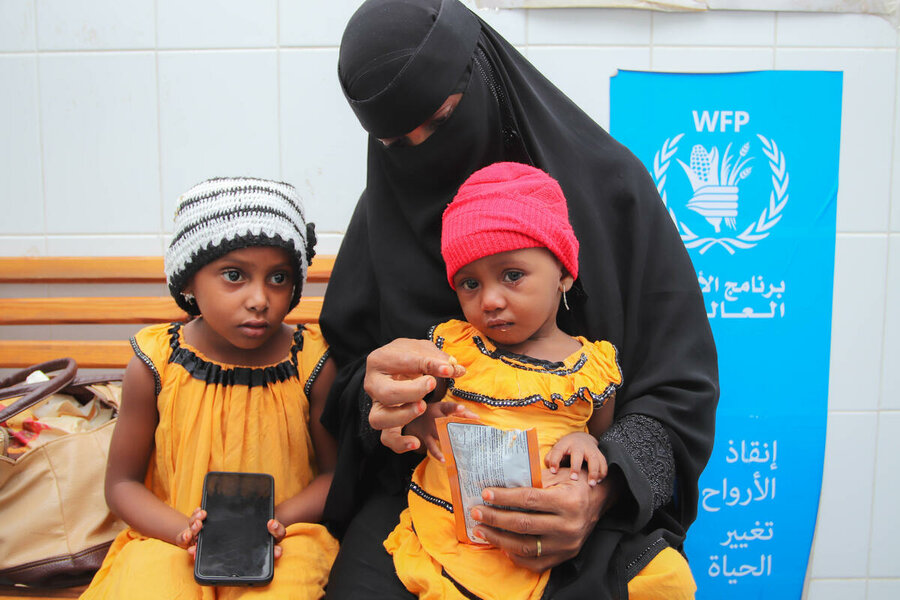
People in Yemen face famine unless the world takes immediate action, the World Food Programme WFP), warned this month. Nearly 50,000 people in Yemen are already living in famine-like conditions, with 5 million just a step away. The UN estimates nearly 250,000 people have died during Yemen’s six-year war, including more than 131,000 people from the indirect consequences of conflict, such as lack of food, health services and infrastructure — the situation in the country is worse now than it has been at any point since 2015. Despite ongoing humanitarian assistance, 16.2 million Yemenis are food insecure.
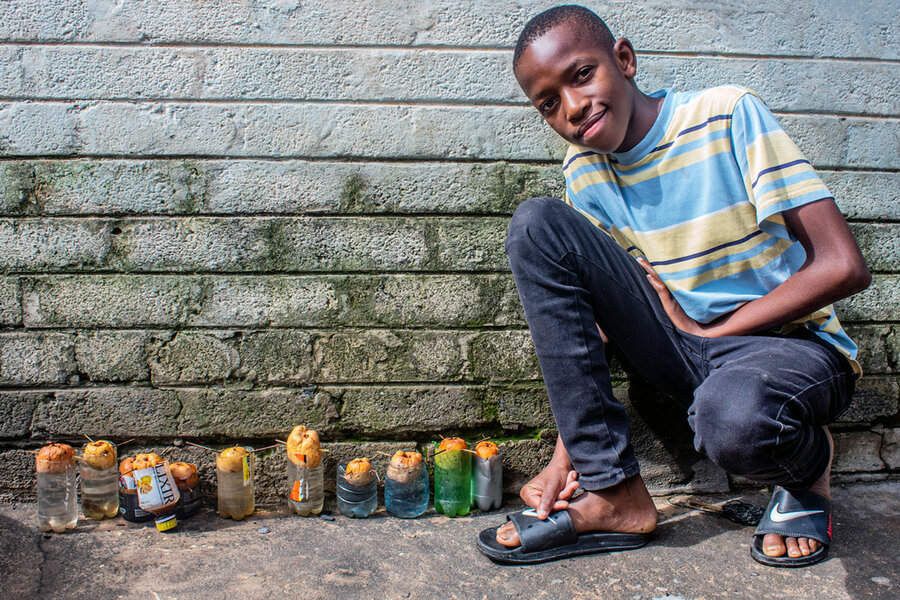
David is learning to grow avocado, green peppers, chillies, rapeseed leaves and potatoes using hydroponics techniques. “My dream is to become a hydroponics expert,” he says. Hydroponics is a soilless cultivation technique that enables plant growth all year round. It uses up to 90 percent less water and 75 percent less space than traditional agriculture, while growing crops 100 percent faster. The 13-year-old lives in Kitwe, Zambia — a country of 18 million people whose food security is threatened by extreme weather caused by climate change.

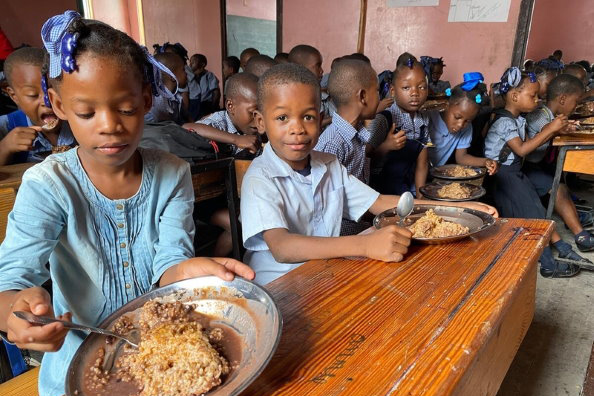
The COVID-19 pandemic risks reversing a decade of hard-won gains in global efforts to provide nutritious food to the world’s most vulnerable children through a free daily meal in school. One in two schoolchildren, or 388 million children worldwide, were receiving school meals when the pandemic struck, the highest number in history, according to the State of School Feeding Worldwide report. By April 2020, 199 countries had closed their schools and 370 million children were suddenly deprived of what for many was their only nutritious meal of the day.