

Between the 16th and 19th centuries, around 27 million Africans were forcefully taken from their homes and shipped across the Atlantic. Only 7.4 million reached their destination, where they faced exploitation and abuse. The impact of the slave trade persists, perpetuating racism and inequality. UNESCO established 23 August as the International Day for the Remembrance of the Slave Trade and its Abolition to bring attention to the history of enslavement. On this day, let's pay tribute to the victims and freedom fighters by renewing our commitment to eradicating racism and discrimination.
Slavery and Human Trafficking

Amid the arid landscapes of Zinder, a migration-prone area in central-eastern Niger, 11-year-old Zara's journey back home sheds light on the battle against child trafficking. Zara was sent to Algeria by her mother to find work but was intercepted during the journey. According to the International Organization for Migration (IOM), more than half of the child victims reported the involvement of friends and family in their recruitment into trafficking, especially where extreme poverty is common. The Centre for Victims of Trafficking, managed by the National Agency for the Fight against Trafficking in Persons and Illicit Migration with support from IOM, has become a sanctuary for survivors like Zara.

Globally, one in three victims of human trafficking is a child, and the majority of these trafficked children are girls. According to the UN Office on Drugs and Crime (UNODC), children are twice as likely as adults to face violence during trafficking. The proliferation of online platforms poses additional risks, as children often connect to these sites without adequate safeguards. The World Day Against Trafficking in Persons (30 July) calls on States to prioritize the protection of children, strengthen laws, improve law enforcement and provide more resources to combat child trafficking.
Didier Drogba cautions young African footballers on the perils of exploitation and human trafficking as part of a campaign by the International Labour Organization, FIFPRO, and the Didier Drogba Foundation, aiming to raise awareness and protect aspiring players.
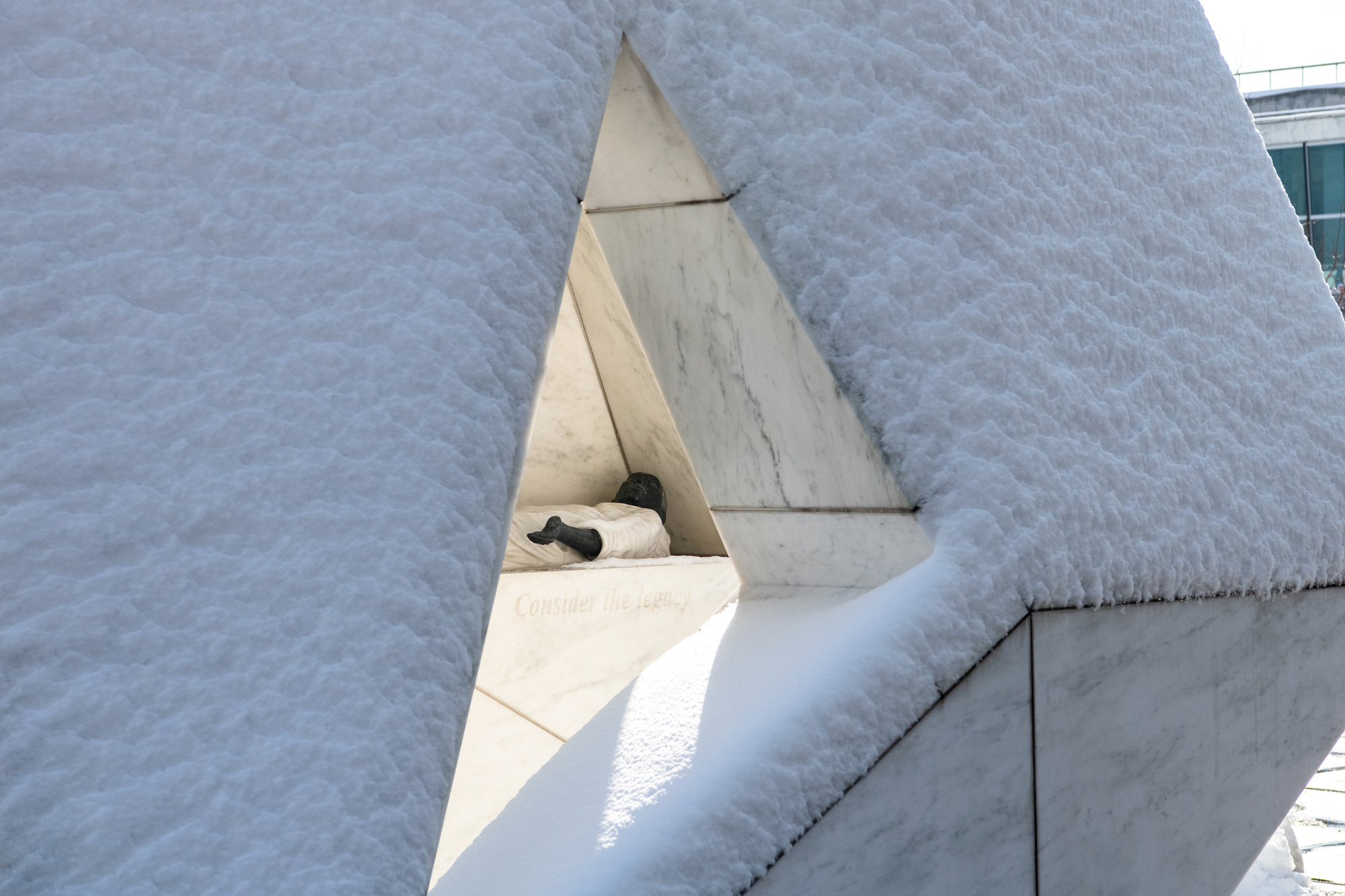
The transatlantic trade in enslaved Africans represents one of the most horrific eras in human history. For four hundred years, enslaved Africans fought for their freedom, while colonial powers and others committed horrific crimes against them. On the International Day of Remembrance of the Victims of Slavery and the Transatlantic Slave Trade (25 March), the United Nations honors the millions of Africans who were trafficked and enslaved. To mark the occasion, the General Assembly will hold a meeting and the UN Outreach Programme will host two new exhibits highlighting the horrors of slavery.
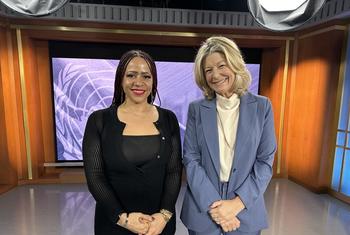
Earlier in December, the UN Department of Global Communications hosted Knowledge, History and Power, an event featuring noted journalists Nikole Hannah-Jones and Laura Trevelyan. The event was organized by the Department of Global Communications Outreach Programme on the Transatlantic Slave Trade and Slavery in collaboration with the Universities Studying Slavery Consortium.
Pauline Batista from UN News talked to both award-winning journalists about the challenges, hopes and dreams for “the future of reparations,” in the United States and globally.
Photo Credit: UN News/Pauline Batista

"Justice gives relief not only to the victims, but to a prosecutor as well. So that is what keeps you upright and keeps you going on and says, okay, it is meaningful what you're doing."
Christian Ritscher’s work brings him into contact with some of humanity’s worst outrages. As head of the UN investigative team to promote accountability for the crimes committed by ISIL in Iraq, he seeks justice for victims of the notoriously violent terror group.
The Islamic State, or ISIL, stands accused of war crimes, crimes against humanity and genocide. Iraq’s Yazidi community were among those worst hit.
In this episode Christian Ritscher reflects on the impact on survivors, the difficulty of gathering testimony and on keeping faith in humanity when faced with its darkest acts.
Photo: ©UNITAD
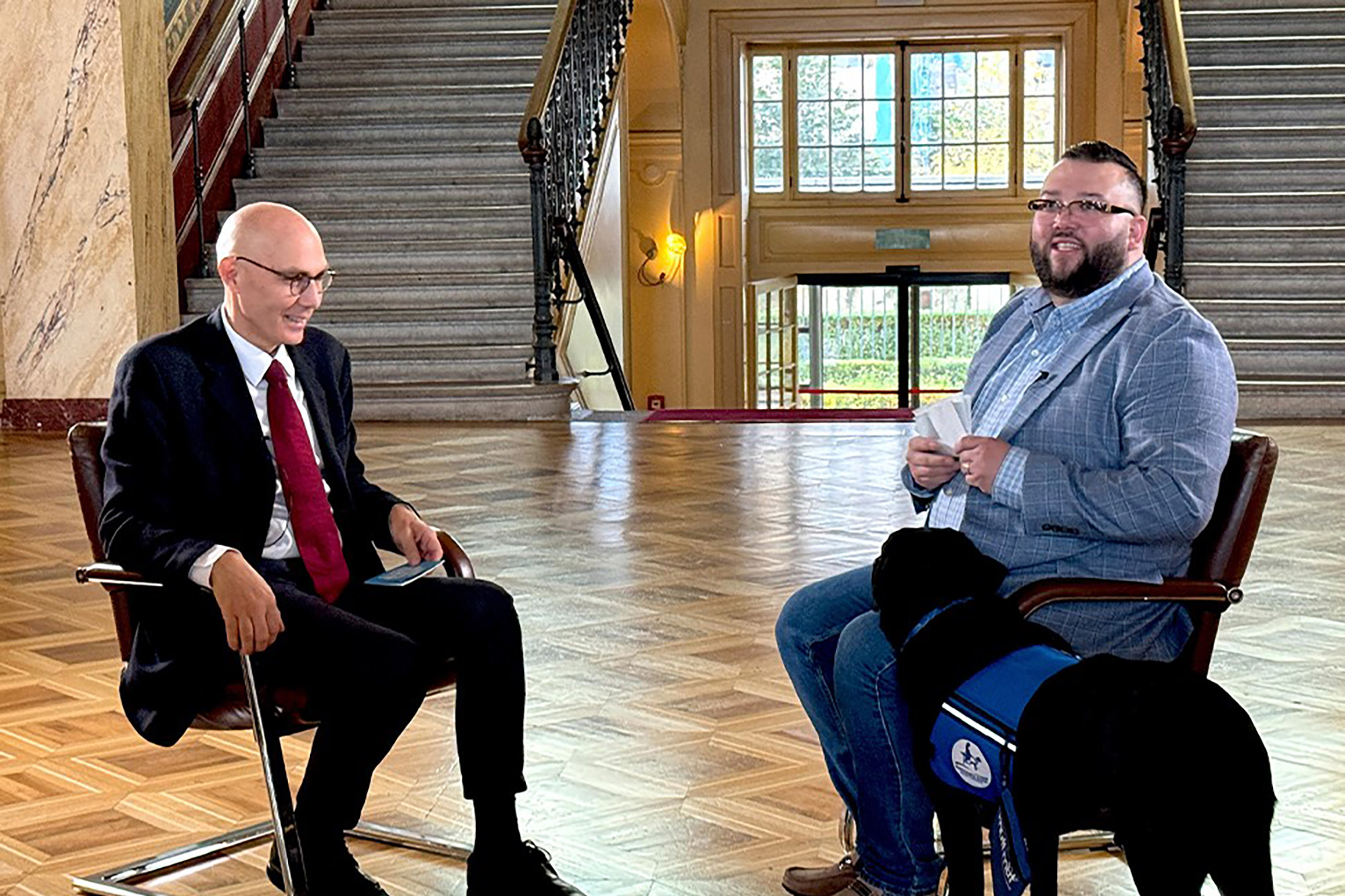
Suamhirs Piraino-Guzman was 14 years old when he was trafficked from his native Honduras and smuggled by his captors into California. He was held prisoner and regularly drugged, alone in a dark and windowless room where he endured unimaginable suffering. Today, almost 20 years later, as an adult male survivor of child sexual exploitation and trafficking he has become an outspoken public advocate and an active member of survivors’ networks. He has also entered his second year as Chair of the Board of Trustees of the UN Voluntary Trust Fund on Contemporary Forms of Slavery. For 30 years, the Trust has been accompanying survivors by donating money to grassroots organizations that provide healthcare, shelter, food, legal aid, vocational training, education, income-generating activities and other support. In 2023, the Fund has aided more than 7,000 people.
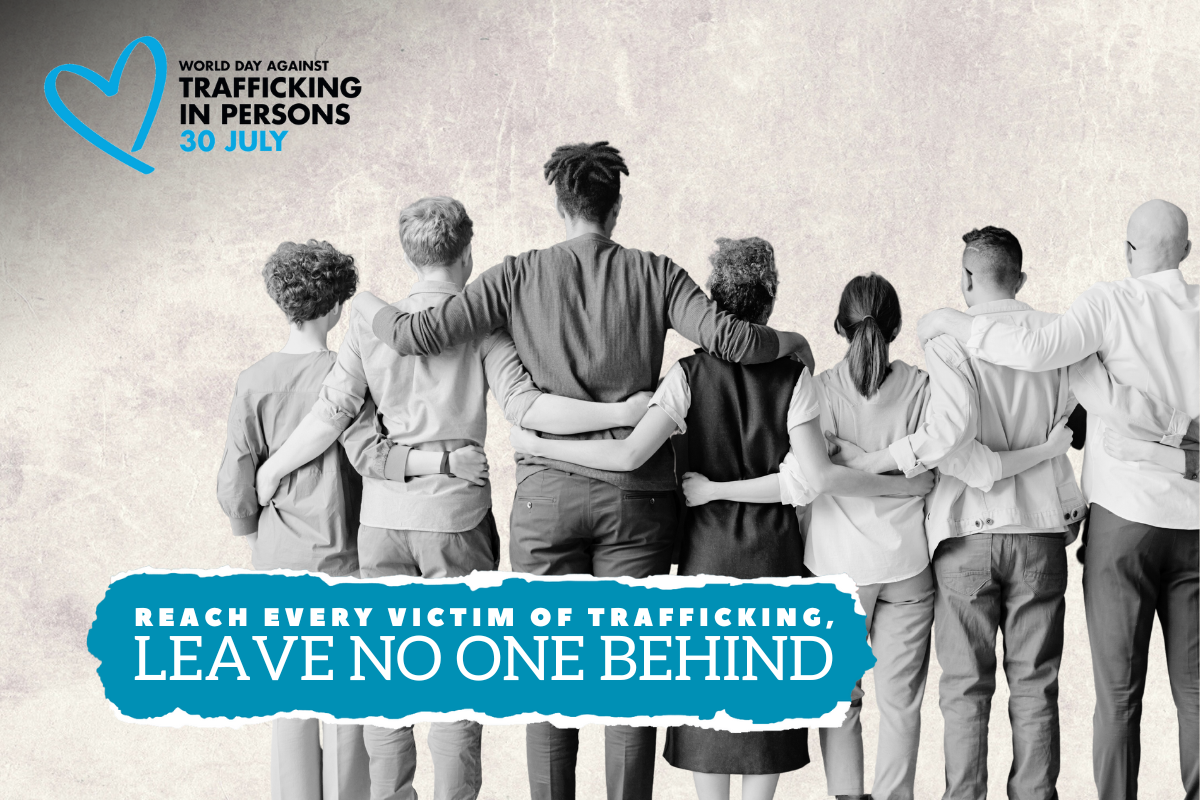
Global crises, conflicts, and the climate emergency are escalating trafficking risks. Displacement and socio-economic inequalities are impacting millions of people, leaving them vulnerable to exploitation by traffickers. National responses, particularly in developing States, appear to be deteriorating. This World Day Against Trafficking in Persons (30 Jul) aims to raise awareness of the disturbing developments and trends identified by UNODC and calls to assess and enhance efforts to strengthen prevention, identify and support victims, and end impunity.
History belongs to all of us. The Slavery Remembrance Exhibition from Amsterdam’s renowned Rijksmuseum is on display at United Nations Headquarters.

The racist legacy of the Transatlantic Slave Trade reverberates today in harmful prejudices and beliefs, which are still being perpetuated and continue to impact people of African descent across the world. Transformative education seeks to empower learners to see the social world critically and through an ethical lens to challenge and change the status quo, in order to end racism and injustice and to build inclusive societies, based on dignity and human rights for all. On 25 March we mark the International Day of Remembrance of the Victims of Slavery and the Transatlantic Slave Trade.
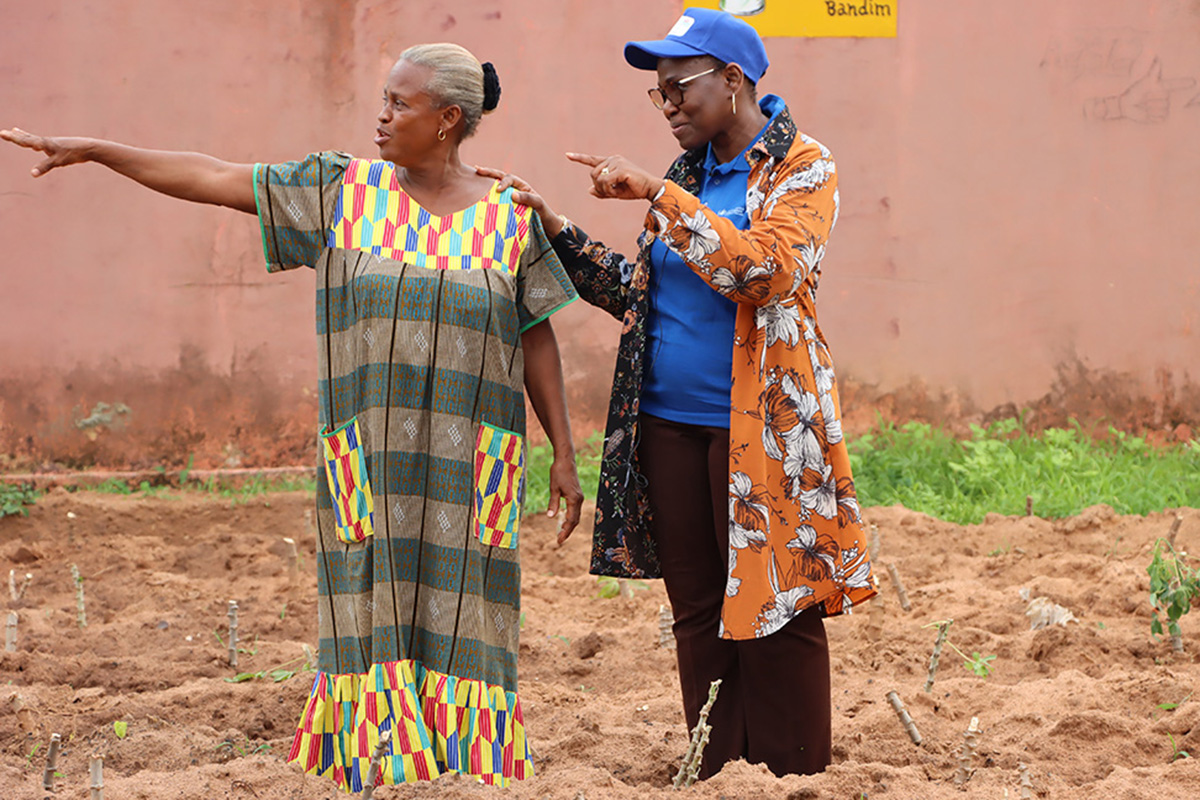
"You saved me!” It was with this cry that five-year-old Aruna Candé threw himself into the arms of his godmother. Aruna had lived on the streets in Dakar begging since the age of 3 to survive. He was able to return to his village and family in rural Guinea Bissau thanks UN Human Rights West Africa Regional Office. Aruna’s case is not isolated. In west African countries, many children are taken away from their parents when they are at a very young age, to go and beg in the capitals of neighbouring countries, thus becoming victims of human trafficking.
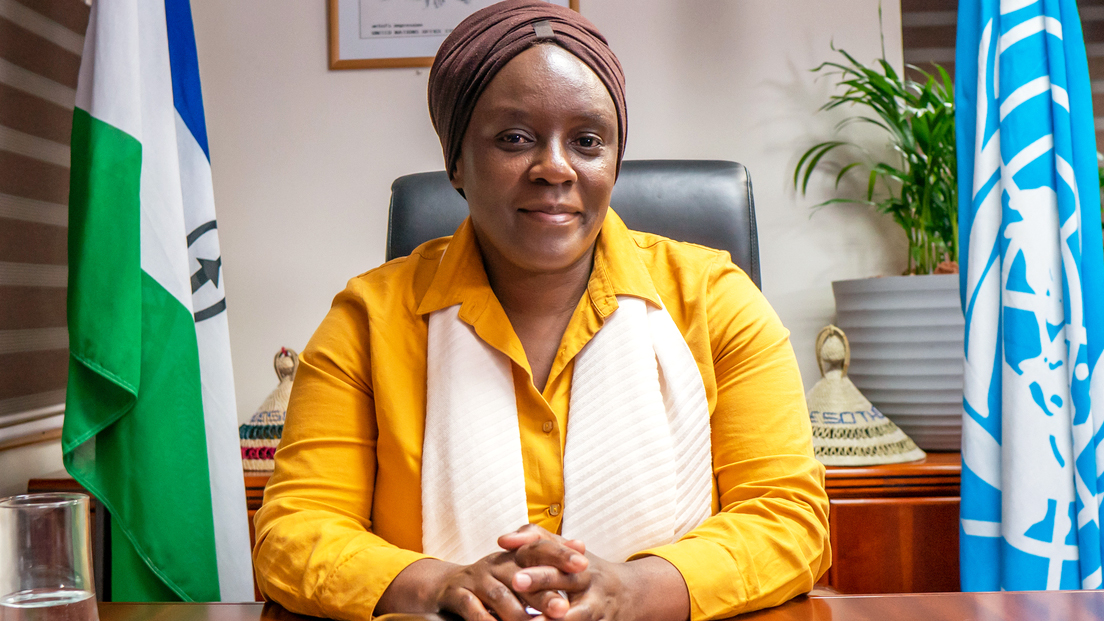
“I realized I'm a black person and that people see the color of my skin first, before they see who I am and what I'm capable of doing…that was the rude awakening.”
With her writing, Amanda Khozi Mukwashi wants to change the conversation on race, gender, and identity. Now United Nations Resident Coordinator in Lesotho, she has written a book exploring the struggle for equity and the historical baggage of slavery and colonization. “Let's talk about it a little more freely, not for it to hold our hands and tie them, but for it to liberate us to think differently.”
Moving back to the UK after leaving a high-level development post in Zambia, Amanda Khozi Mukwashi got tired of being asked where she was really from. In this episode, she reflects on the discrimination she has faced, on the rich family history she inherited from her grandmother, and on discovering her own multifaceted identity.

Although modern slavery is not defined in law, it is used to describe such practices as forced labour, debt bondage, forced marriage, and human trafficking. Essentially, it refers to situations of exploitation that a person cannot refuse or leave because of threats, violence, coercion, deception, and abuse of power. The focus of the International Day for the Abolition of Slavery (2 December) is to eradicate this injustice. It also marks the date of the adoption the United Nations Convention for the Suppression of the Traffic in Persons and of the Exploitation of the Prostitution of Others.
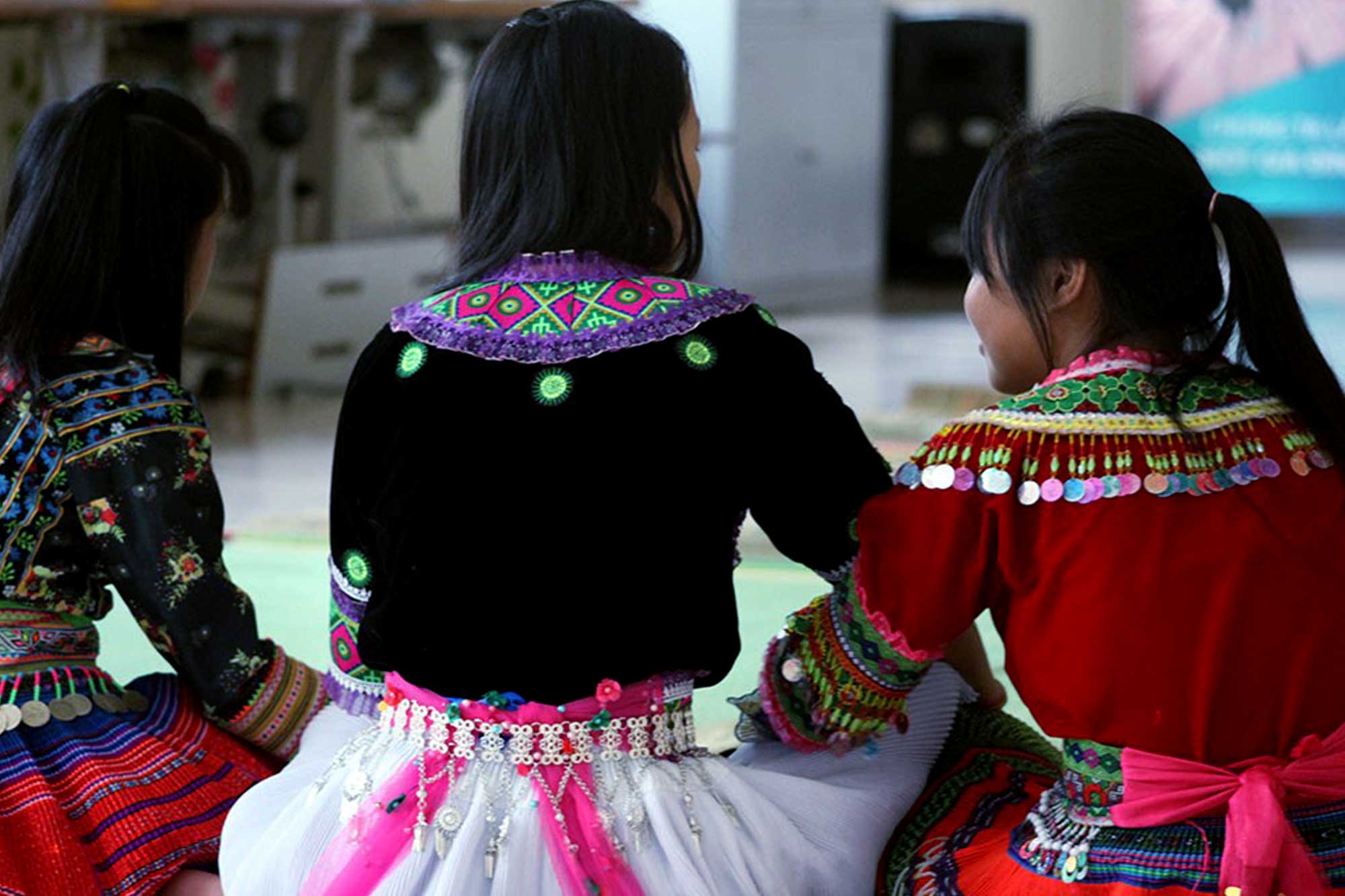
The Compassion House project, funded by the UN Voluntary Trust Fund on Contemporary Forms of Slavery, helps hundreds of thousands of enslaved people.